What Is a Betting Broker?
The Short Answer
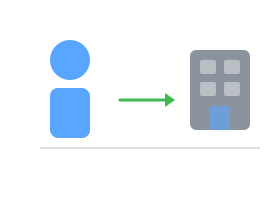
So, what is a betting broker? A betting broker sits between you and the bookmakers. You fund one account, pick your bets, and the broker places them at whichever book offers the best line. Simple as that. No juggling ten different logins, no sweating over which account just got gubbed.
The stock market comparison works well here. You don't walk onto the NYSE floor and buy shares yourself — your broker handles execution. A betting broker does the same thing. You make the decisions, they route your money to the right bookmaker. I've used this setup for over a decade and honestly can't imagine going back to managing individual accounts.
How Betting Brokers Differ From Bookmakers
This is the part most people miss. A bookmaker profits when you lose. Full stop. Your loss is their revenue, and that creates an obvious problem: the moment you start winning consistently, they have every reason to cut you off. And they will. Stake limits, account closures, odds restrictions — you name it, they'll throw it at you.
A betting broker doesn't care if you win. They take a commission on your action, so a profitable bettor is actually a *better* customer for them. More volume, more commission. That incentive alignment changes everything about how you get treated.
Here's how the two stack up:
| Feature | Bookmaker | Betting Broker |
|---|---|---|
| Bets against you | Yes | No |
| Restricts winners | Constantly | Almost never |
| Makes money from | Your losses | Commission fees |
| Bookmaker access | Just their own odds | Multiple sharp books |
| Account setup | Separate login per book | One wallet, one dashboard |
Want the full breakdown? Check out the differences between brokers and traditional bookmakers.
Who Uses Betting Brokers?
Brokers aren't for everyone — and that's the point. You'll find a very specific crowd using them:
- Gubbed bettors who've already been limited by mainstream books for the crime of winning too much
- Arbers who need fast, simultaneous access across multiple bookmakers
- Full-time bettors chasing the sharpest lines and the highest stakes available
- Bettors stuck in restricted markets who can't open direct accounts with the books they actually want
If you bet a tenner on the weekend for fun, a broker is overkill. But if you're grinding for long-term profit and you've already felt the sting of account limitations, a broker stops being optional pretty fast.
Which Bookmakers Can You Access?
This is where brokers earn their keep. They connect you to sharp bookmakers — the ones with tight margins, massive limits, and zero interest in limiting your account. These are the books that matter:
- Pinnacle (PS3838) — the gold standard for sharp odds worldwide
- SBOBet — the go-to for Asian football markets, hands down
- ISN — deep liquidity, solid Asian sharp book
- 3ET — another strong Asian option with competitive lines
- Betfair Exchange — peer-to-peer betting, no bookmaker edge
Getting access to even two or three of these through a single account makes the broker model worth it. I'd take Pinnacle odds through a broker over any retail bookmaker's "boosted" prices every single day.
Curious about the mechanics? Read about how brokers actually process your bets — knowing what happens after you click "place bet" matters more than most people think.
The Cost of Using a Broker
Let's be upfront: brokers charge commission. Expect somewhere between 2% and 6%, depending on the platform and the fee model. Some take a cut only on net winnings, others clip every single bet. That difference sounds small until you've placed a few thousand wagers and realized one model costs you twice as much as the other.
Here's the thing, though — run the actual numbers before you dismiss the cost. Say you're putting 5,000 EUR through a broker monthly and paying 3% on net winnings. Compare that against the hidden 5-10% overround baked into retail bookmaker odds. The broker's transparent commission almost always comes out cheaper. I've done the math on my own betting history multiple times, and the broker route saves me real money at volume.
The key is picking the right commission structure for your style. If you win at a high rate but with small edges, a net-winning model hammers you less. Get this wrong and you'll bleed margin on every bet.
Get Started With a Broker
You've got the concept down — now go try it. Most brokers verify your account and get you funded within a day. Once you're in, you immediately tap into sharp bookmakers that would otherwise be completely off-limits. Managing one wallet instead of five or six scattered balances frees up time you should spend on actual analysis.
If you've been limited at retail books or you're just tired of getting worse odds than the sharps, a broker solves both problems at once. Open a broker account and see the process yourself — start with a smaller deposit to test execution speed and how fast withdrawals actually land before you commit serious bankroll. That's the smart play.
Access Top Betting Brokers
Trusted platform — Pinnacle, SBOBet & more under one account
Frequently Asked Questions
Is a betting broker the same as a tipster?
Not even close. A tipster tells you what to bet on. A broker gives you access to bookmakers so you can place your own bets. Totally separate services — one offers opinions, the other offers infrastructure.
Do I need a large bankroll to use a broker?
Most brokers set minimum deposits between 500 and 2,000 EUR. They're built for people who take betting seriously, not for someone throwing a fiver on the weekend accumulator.
Are betting brokers legal?
Yes. Brokers hold licenses and operate as regulated intermediaries. They don't set odds and they don't take on any risk from your bets — they just connect you to the bookmakers that do.
Related Guides
- Betting Brokers — back to the betting brokers overview
- How Betting Brokers Work — understand the step-by-step process
- Broker vs Bookmaker — detailed comparison of both models